Planning your first safari should be exciting, but most travelers quickly hit a wall: dozens of lodge options, wildly different price tiers and a calendar of seasons that all promise something different. One wrong pick, whether it is a camp that closes for the rains or a nightly rate that hides hundreds of dollars in park fees, can turn a dream trip into an expensive disappointment. Learning how to choose a safari lodge before you book is the single best way to protect both your budget and your experience.
This guide walks you through the decisions in order, so each choice builds on the last. You will set a realistic budget, pick the right season, match a park or reserve to your wildlife priorities, and compare lodge types from permanent lodges to mobile camps. We will also cover how location within a park changes your daily game drives, when to book, and how long to stay. By the end, the process will feel far less overwhelming.
Decide Your Budget Before You Browse
Before you fall in love with a photo of a plunge pool overlooking a waterhole, decide what you can actually spend per night. Safari pricing is layered, and the sticker rate is only part of the story. Budget camps and lodges start around $100-200 per person per night, mid-range options typically run $300-600, and luxury camps often start at $800-1,500 or more. Knowing your tier early saves you from browsing camps you cannot afford, or worse, booking a cheap camp that leaves you disappointed.
The nightly rate can also be misleading if you do not check what is included. Most safari lodges bundle game drives, meals and airstrip transfers into the price, and some include park fees as well. Others do not, and daily conservation fees charged by parks and reserves can add a meaningful amount per person per day. These official fees change regularly, so ask the lodge or your operator to spell out exactly what the rate covers and check the current fee for your chosen reserve before you book.
The costs that hide outside the nightly rate
Finally, budget for the expenses that never appear on the lodge invoice. International flights, visas, travel insurance and tips for guides and camp staff all add up, and together they can shift your trip into a higher price bracket than the nightly rate suggests. Visa fees and park charges also tend to be revised from year to year, so confirm current amounts with official sources or your operator. Get quotes for these extras early, then set your per-night lodge budget around what is left. A slightly simpler camp with all costs covered usually beats a fancier one that stretches you too thin.
Pick the Right Season for Your Safari
Season shapes everything about a safari: how many animals you see, how much you pay and even which camps are open. Timing matters more than most first-timers realize, so settle it before you start comparing lodges.
Peak dry season: easiest wildlife viewing
June to October is the peak dry season across East Africa. Grass is short, animals gather at rivers and waterholes, and wildlife viewing is at its easiest. This window also includes the Great Migration river crossings, which typically occur July to September and draw visitors from around the world. The tradeoff is price and crowds: peak-season rates are the highest you will pay, and popular areas see more vehicles around major sightings.
Green season and shoulder months
The green season from March to May brings heavier rain, but it also cuts rates by 20-40%. The landscape turns lush and green, photography is often superb, and camps are quieter. The catch is that rain can make some roads difficult and some camps close entirely during these months, so confirm your chosen lodge is open before booking.
Shoulder months like January-February and November offer a middle path. Prices sit between peak and low season, weather is generally manageable, and you will share sightings with fewer vehicles. For many first-timers watching their budget, these months deliver the best balance of cost, comfort and game viewing.
Choose a Park or Reserve That Matches Your Goals
Not all parks and reserves deliver the same experience, and the biggest name is not automatically the best fit. Start by asking yourself what you actually want to see and how you want to see it.
Big names versus private conservancies
Famous reserves offer iconic wildlife and that classic safari feeling, but their popularity means more vehicles, especially around a good sighting. Smaller private conservancies bordering the same ecosystems usually allow off-road driving and night drives, both of which are typically off-limits in the main reserves. That means closer encounters with animals and the chance to spot nocturnal predators after dark. Vehicle density is also far lower, so you might watch a leopard for half an hour without another car in sight.
Match the destination to your priority
Be honest about your priorities. If big cats or the Great Migration are the goal, choose a destination known for them. If elephants are your passion or you are a keen birder, different parks will serve you far better than the famous names. Ask your operator which reserves genuinely excel at your priority rather than defaulting to the most advertised option.
Finally, check the travel time from the nearest airstrip. Remote lodges can add a full day of transfers to your trip, in each direction, which matters if your total time is limited. A camp slightly farther from the marquee sights but close to an airstrip sometimes gives you more actual time on game drives.
Compare Lodge Types: Tented Camps, Lodges and Mobile Camps
One of the biggest decisions for a first safari is what kind of camp you actually sleep in. The word “lodge” covers everything from brick-and-mortar properties with swimming pools to canvas tents that pack up and follow the herds. None of these is better across the board; they simply suit different comfort levels and travel styles.
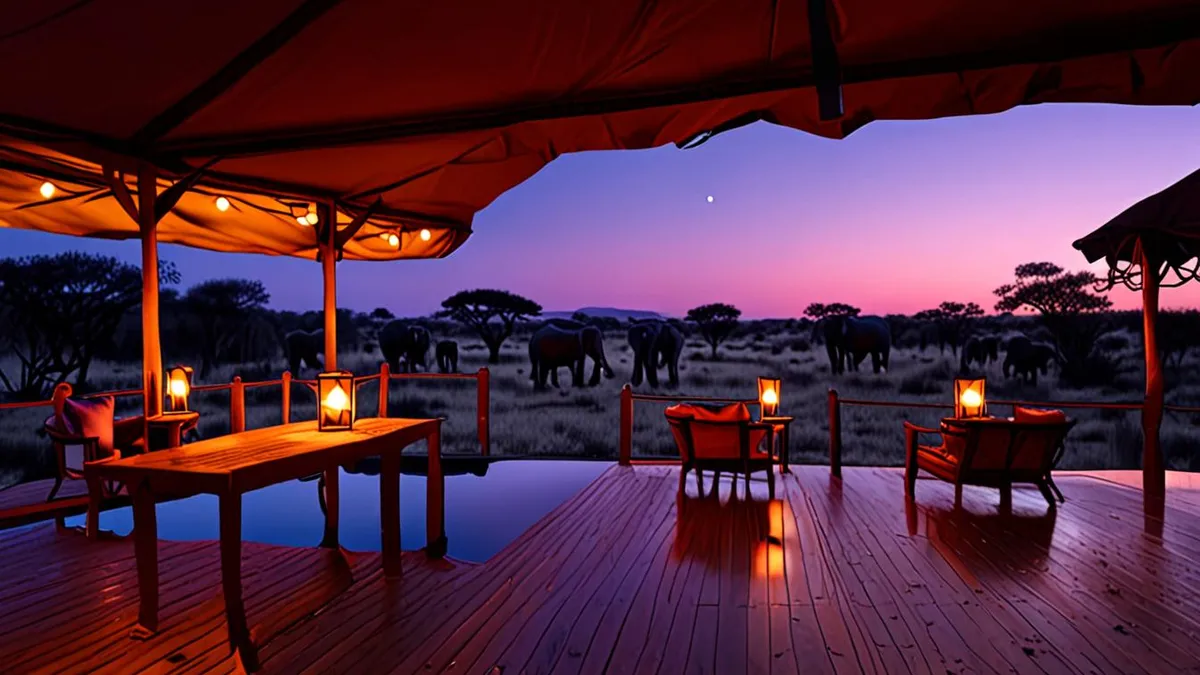
Permanent lodges are the easiest entry point for most first-timers. You get solid walls, reliable electricity, usually a pool, and amenities that behave like a regular hotel. Luxury tented camps are the middle ground: large canvas suites on fixed platforms with real beds, en-suite bathrooms and often a plunge pool, so you keep the romance of sleeping under canvas without roughing it. If you want a sense of how far tented comfort has come, this waterfront pavilion with grand comfort gives a feel for the high-end end of the scale.
- Permanent lodges: best if you want predictable hot water, Wi-Fi and a fenced or managed layout, which also makes them a comfortable choice for travelers nervous about wildlife wandering through camp.
- Luxury tented camps: canvas walls mean you hear hyenas and lions at night, and most camps ask you to be escorted after dark, an atmosphere many guests say becomes the highlight of the trip.
- Mobile camps: these relocate with the Great Migration between June and October, so you stay close to the herds; expect smaller tents and shared bathrooms at the simpler end.
- Small camps (6-12 tents): fewer tents typically mean one guide who knows your interests, flexible drive times and sightings where you are not sharing a leopard with a dozen other vehicles.
A practical tip: check the camp’s total bed count before booking. A 10-tent camp with a good guide often delivers a better first safari than a 60-room lodge with a famous name, especially for photography and unhurried sightings.
How to Choose a Safari Lodge Location Within the Park
Where your lodge sits within or around a park changes your safari more than most travelers expect. The simplest rule: lodges inside the reserve gates get a head start on dawn game drives, while those outside add roughly 30-60 minutes each way. That may not sound like much, but predators are most active in the first hour of light, and an inside-the-gate camp can be watching a hunt while others are still driving to the entrance.
Staying outside the gates is not a dealbreaker, though. It often costs less, and some travelers enjoy the towns and shops near the main entrances. Just be honest with yourself about whether you will happily wake at 5 a.m. to make the most of the day.
Follow the Water
Camps positioned near rivers and permanent waterholes deliver wildlife sightings straight from the deck. Elephants, buffalo and big cats come to drink, especially in the dry months, so you can watch game between drives without leaving your chair. If relaxed viewing matters to you, ask specifically whether the camp overlooks a water source and how reliable the sightings are there.
Inside the Park or in a Conservancy
Private conservancies trade big-name access for exclusivity. You typically share the land with far fewer vehicles, and rules often allow off-road driving to approach animals and night drives after dinner. The trade-off is that the iconic landmarks and dense wildlife concentrations of the famous reserves may be a drive away. For a first safari, a mix of nights, some in the main reserve and some in a conservancy, gives you both worlds.
Book at the Right Time and Plan Your Stay Length
Good lodges in the best locations sell out early, and timing your booking matters as much as choosing the camp itself. Small camps may have only a handful of tents, so the most sought-after properties are often fully committed long before the season begins. The steps below walk you through reserving well, sizing your stay sensibly and asking the right questions before you pay a deposit.
- Book 9-12 months ahead for peak season. The June to October window is the busiest in East Africa, and small camps with limited tents fill first. Reserving roughly a year out gives you the widest choice of camps and room categories.
- Use a 3-6 month window for shoulder months. January-February and November trips usually leave you room to plan later, and you may even find late availability at popular camps. Check cancellation terms either way.
- Plan 3-4 nights at one lodge. Settling into a single camp rather than hopping every night means deeper knowledge from your guide, less time packing and flying, and a far more relaxed rhythm.
- Ask about single supplements before confirming. Solo travelers are often charged extra for a sole-use room or tent, and the size of that supplement varies widely between camps.
- Check child policies if traveling as a family. Some camps welcome children of any age with family tents; others set minimum ages or restrict young guests from certain activities.
- Ask about fly-camp add-ons. Many lodges offer a one- or two-night walking safari under canvas as an extension, a memorable way to end a stay if your legs and comfort level allow it.
Once these details are settled, confirm everything in writing before paying your deposit. Ask specifically what the rate includes, such as game drives, meals and transfers, and whether park fees are billed separately or bundled in. Get the deposit schedule, cancellation terms and any airstrip transfer arrangements in an email so there is a clear record if plans change. It is also smart to reconfirm your arrival details with the camp a week or two before you fly, since remote lodges sometimes coordinate your pickup directly with the safari operator. A little clarity at booking stage prevents most surprises on arrival, leaving you free to focus on the wildlife rather than the paperwork.
Your First Safari, Simplified
Choosing your first safari lodge really comes down to three questions: what you can spend per night, when you want to travel, and which animals matter most to you. Set a realistic budget, pick your season, and match the park or reserve to those wildlife priorities. From there, choose a lodge type and location that fit your comfort level, then book early if you are aiming for peak season.
The rest is simpler than it looks. A stay of 3-4 nights at the right camp gives you time to settle in, get to know your guide, and watch the bush change through the day. Your first safari rarely needs to be complicated, and one well-chosen lodge beats a rushed itinerary every time. If this guide helped you plan, leave a comment or share it with a fellow traveler.